Many people struggle with dull, uneven skin tone, rough patches, or clogged pores on the body that won’t respond to lotion alone. A consistent body scrub for skin brightening can be the missing step that renews texture, evens tone, and helps active brightening ingredients penetrate. In this guide from Sweet and Shine Beauty you’ll find why exfoliation matters, a practical step-by-step routine, best methods, common mistakes, and pro tips to get visible, safe results worldwide.
Why body scrub for skin brightening Matters
Exfoliation removes dead skin cells, stimulates circulation, and reveals fresher, brighter skin underneath. For people with hyperpigmentation, post-inflammatory marks, or dullness, using a targeted body scrub for skin brightening can:
- Improve skin texture and smoothness, making moisturizers and serums work better.
- Reduce the appearance of dark spots and uneven tone when combined with brightening actives.
- Unclog pores on the back, chest, and arms to prevent body acne.
- Boost circulation and lymphatic drainage for healthier-looking skin.
User pain points include sensitivity, fear of over-exfoliation, lack of visible results, and uncertainty about which products work. A correct routine and product choice (gentle physical scrubs, chemical exfoliants, or tools like the Nafrican exfoliating net) solves these problems safely and sustainably.
Step-by-Step body scrub for skin brightening Guide
Step 1: Prep the skin — Cleanse gently
Start with a warm shower to open pores and soften dead cells. Use a mild, pH-balanced cleanser to remove surface oil and sweat. If you prefer a soap option, consider the dove exfoliating soap benefits: it combines gentle cleansing with mild exfoliation and moisturizing ingredients that reduce dryness often caused by scrubbing. Cleansing first ensures the scrub can contact the skin directly and work effectively.
Step 2: Choose the right exfoliant
Select an exfoliant based on your skin’s sensitivity and goals. For brightening, use either:
- Gentle physical scrubs with fine particles (sugar, jojoba beads) for textured areas. Avoid harsh salt or shell scrubs on sensitive skin.
- Chemical exfoliants with AHAs (glycolic, lactic) or BHAs (salicylic) for pigment reduction and deeper cellular turnover.
- Exfoliating tools like the Nafrican exfoliating net benefits: it helps circulate blood and remove dead skin with minimal skin abrasion when used correctly, ideal for body areas like legs and back.
Patch-test new products on a small area before full use. For dark spots, pair physical or mechanical exfoliation with chemical agents like lactic acid to promote brightening without excessive irritation.
Step 3: Technique — How to scrub safely
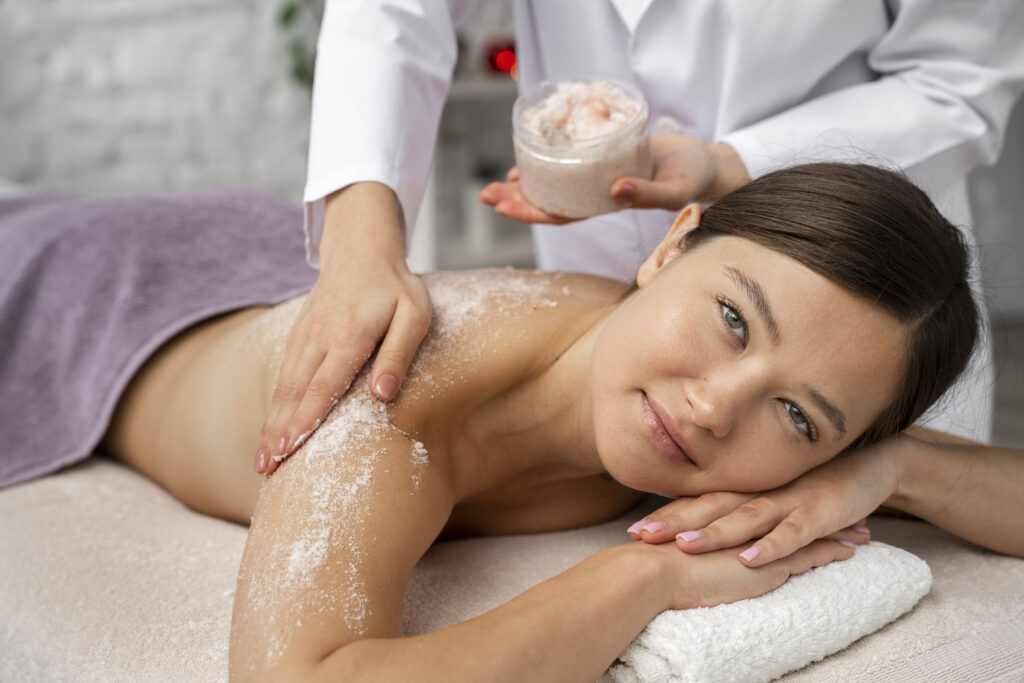
Apply the scrub in circular motions with gentle pressure; take 30–60 seconds per area (arms, legs, torso). Avoid rough, repetitive scrubbing that causes microtears. For chemical exfoliants, follow product directions — often applied and left for a set time or used in body lotions for daily gentle action. Rinse thoroughly and pat skin dry.
Key technique tips:
- Scrub once to twice a week for normal skin; reduce to every 10–14 days for dry or sensitive skin.
- Do not exfoliate irritated, sunburned, or broken skin.
- Use lukewarm water — hot water can strip oils and worsen dryness.
Step 4: Post-exfoliation care and maintenance
After exfoliation the skin barrier is more permeable. Follow with a hydrating, brightening routine:
- Apply a fragrance-free moisturizer or body oil to lock in moisture.
- Use serums or lotions containing vitamin C, niacinamide, or tranexamic acid for targeted brightening (patch test first).
- Wear broad-spectrum sunscreen on exposed areas daily — exfoliated skin is more sun-sensitive and prone to pigment formation.
Consistency over weeks yields measurable improvement; combine exfoliation with topical brightening actives and sun protection for best results. If you’re unsure where to start, our team can help — Contact us for personalized guidance.
Best Methods / Solutions
Not every method suits every skin type. Here’s what works best from an expert perspective:
- For sensitive or aging skin: gentle chemical exfoliation using lactic acid products and moisturizing washes like Dove that provide mild mechanical lift without stripping — highlighting the dove exfoliating soap benefits in reducing irritation.
- For acne-prone body skin: salicylic acid body washes and leave-on BHA treatments to penetrate and clear pores.
- For rough, keratosis pilaris-prone areas: repeat gentle physical exfoliation (sugar scrubs) combined with urea or lactic acid creams to soften bumps.
- For budget-friendly at-home routines: use a fine-grain scrub twice weekly, incorporate the Nafrican exfoliating net benefits to increase circulation, and finish with affordable vitamin C body lotions.
Professional treatments like body peels or microdermabrasion can accelerate brightening for stubborn hyperpigmentation, but should be performed by licensed professionals and spaced appropriately to avoid over-exfoliation.
Common Mistakes to Avoid
Avoid these frequent errors to protect your skin and maximize brightening results:
- Over-exfoliating: Scrubbing too often causes redness, sensitivity, and paradoxical darkening. Fix: limit to recommended frequency and observe skin response.
- Using harsh abrasives: Large, sharp particles tear skin. Fix: swap to sugar or jojoba beads and slow circular motions.
- Neglecting sun protection: Exfoliation increases UV sensitivity. Fix: apply SPF daily on exposed areas and reapply as needed.
- Combining too many actives at once: Mixing strong AHAs, retinoids, and vitamin C on body skin can irritate. Fix: introduce one active at a time and space treatments.
- Skipping moisturization: Leads to flakiness and uneven tone. Fix: use rich moisturizers or oils after exfoliation to restore barrier function.
Pro Tips for Better Results
Advanced strategies to accelerate safe brightening:
- Layer light chemical exfoliation (2–5% lactic acid body lotion) on alternating days with gentle physical scrubs once a week to boost cell turnover without irritation.
- Use the “pre-moisturize” trick: apply a thin film of moisturizer before sun exposure on exfoliated areas to reduce transepidermal water loss and visible dryness.
- Incorporate antioxidant-rich serums (vitamin C) at night to complement exfoliation-driven renewal and suppress melanin formation.
- Adopt a body-care schedule — designate scrub day, brightening-serum days, and deep-moisture days to prevent overlap and irritation.
- When traveling or starting a new routine, begin gradually and test how climate affects frequency — dryer climates may need less frequent scrubbing.
If you’re building a beauty business or product line around exfoliation, learn best practices and product selection with Sweet and Shine Beauty — Start Business resources to scale safely and ethically.
Conclusion
A dedicated body scrub for skin brightening is a simple, high-impact step to revive dull, uneven skin. When done correctly — choosing the right scrub, using safe technique, following with hydration and sun protection — exfoliation improves texture, reduces dark spots, and makes other skincare actives more effective. Start gently, be consistent, and prioritize barrier health. For personalized plans or professional help, Get Start with Sweet and Shine Beauty to create a routine that fits your skin and lifestyle.
Frequently Asked Questions
How often should I use a body scrub for skin brightening?
Most people benefit from exfoliating once to twice weekly. Sensitive skin should limit to every 10–14 days. Chemical exfoliants at low concentrations can be used more frequently (e.g., every other day) depending on tolerance. Always monitor for redness or irritation and adjust frequency.
Can I use Dove exfoliating soap for brightening results?
Yes. Among its strengths, the dove exfoliating soap benefits include gentle cleansing with mild exfoliating elements and moisturizing agents that reduce dryness after scrubbing. It’s a good option for those seeking a low-irritation start to body brightening, though stronger dark spot treatments may be needed for stubborn hyperpigmentation.
Are exfoliating nets like the Nafrican exfoliating net safe to use?
Yes, when used correctly. The Nafrican exfoliating net benefits include increased circulation and effective dead-skin removal with less abrasive particles than some scrubs. Use with gentle pressure, avoid sensitive or broken skin, and limit frequency to prevent over-exfoliation.
Will exfoliation remove dark spots completely?
Exfoliation helps fade superficial dark spots by accelerating cell turnover, but deeper hyperpigmentation may require consistent topical brighteners (niacinamide, vitamin C, tranexamic acid) or professional treatments. Combine exfoliation with sun protection for the best long-term results.
What should I do if my skin becomes irritated after exfoliating?
Stop exfoliating immediately and soothe the skin with a fragrance-free moisturizer or a cooling aloe product. Avoid active ingredients (AHAs, BHAs, retinoids) until the skin has healed. If irritation persists or worsens, consult a dermatologist for targeted care.